AN ICELANDIC KIND OF CHARACTER
The Icelandic sheep.
Explore our illustrated guide to Icelandic sheep, wool, farming and tradition. Select a panel to read it at a larger size, or explore the readable introductions below.
Read the guide topics15 illustrated panels A little Icelandic farm history.
WOOL, FARMING & FAMILY HISTORY
Read the stories
behind the pictures.
Short introductions to our original illustrated panels. The guide includes historical photographs and accounts; animal numbers and farm details in the pictures refer to the time they were made.
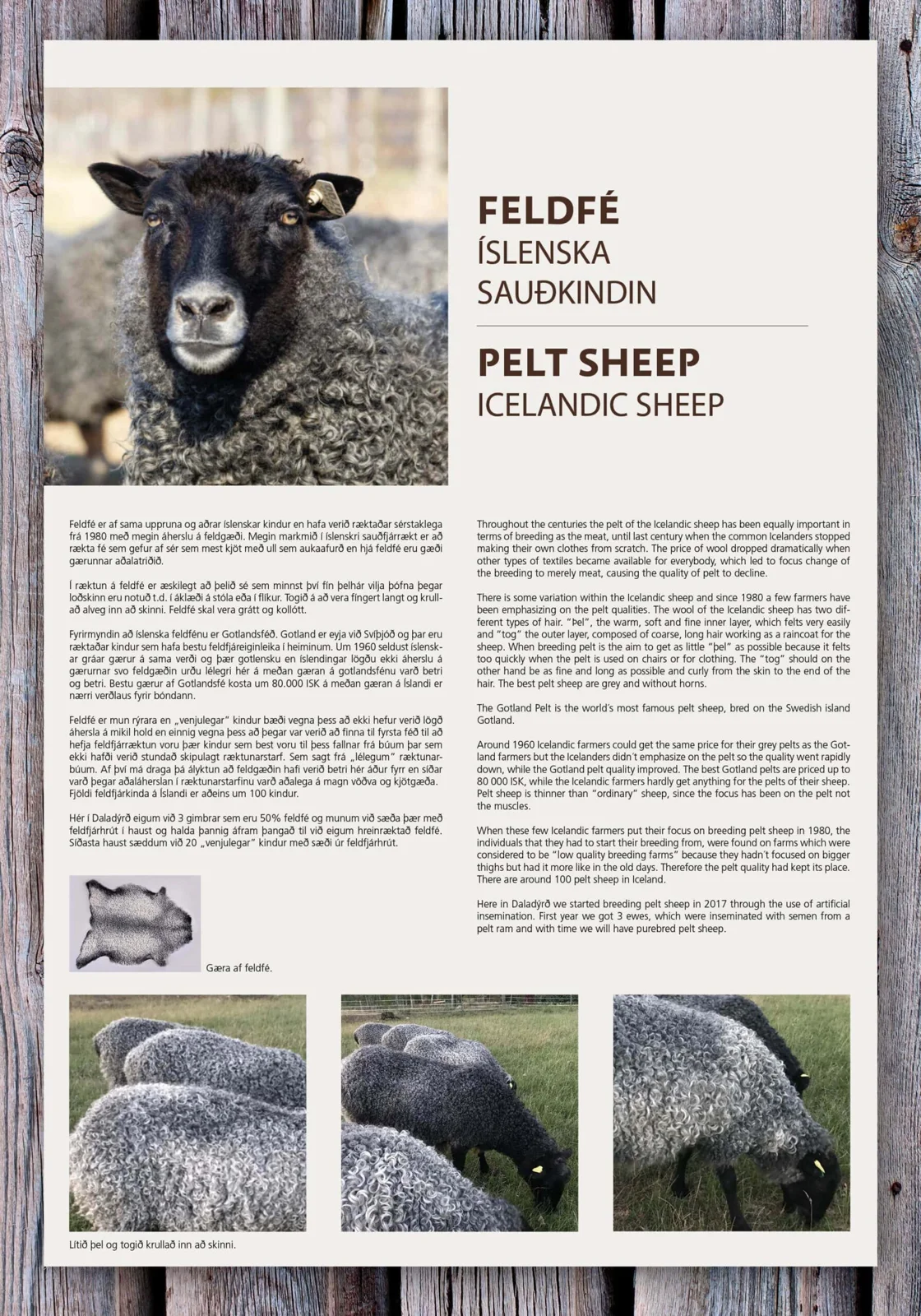
01 / Pelt sheep
The first panel describes sheep selected for the qualities of their fleece and pelt. It explains the two layers of Icelandic wool and the preference for long, curling outer fibres in pelt breeding. It also records Daladýrð’s start in pelt-sheep breeding in 2017. That is part of the farm’s history, rather than a description of the current flock.
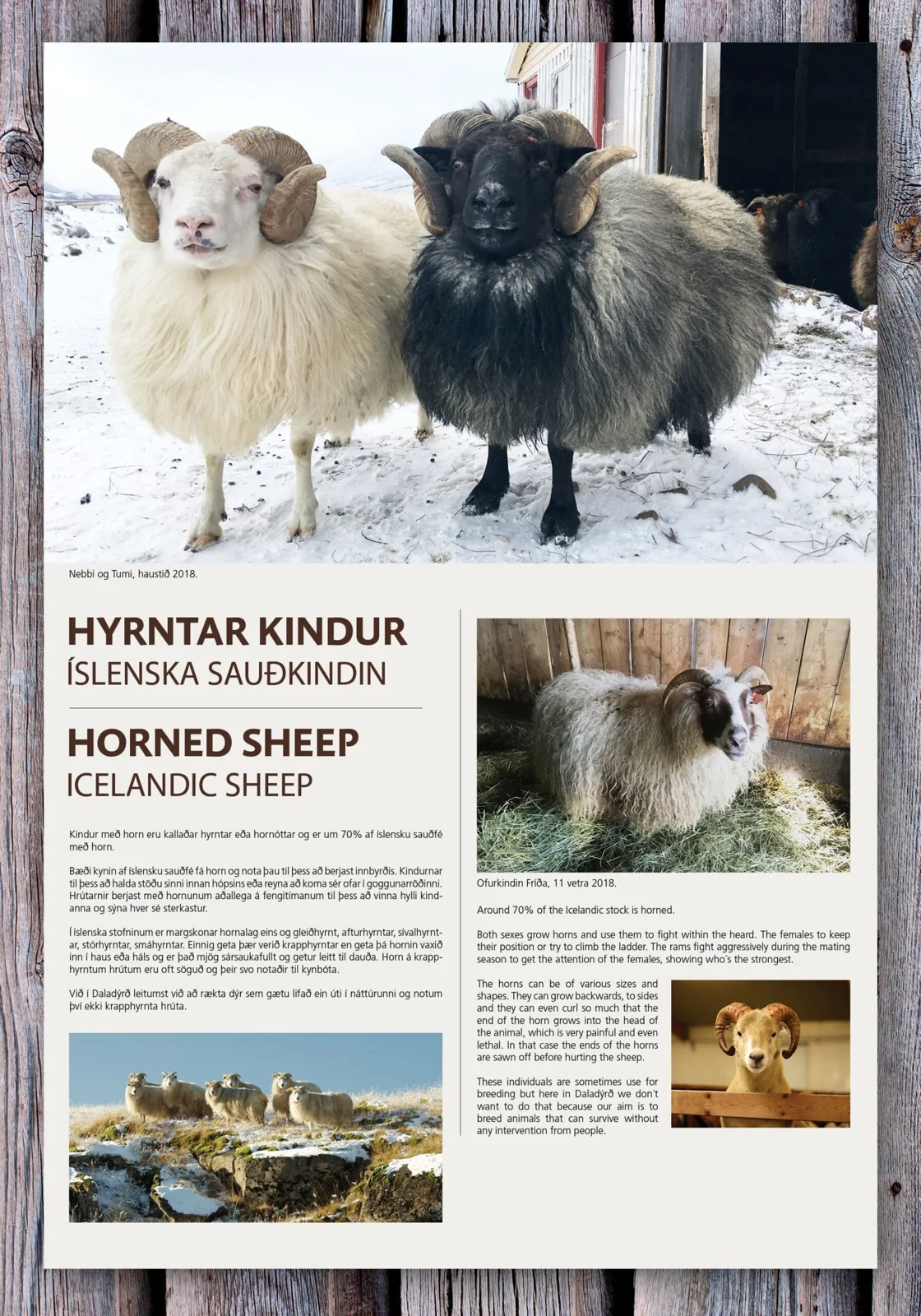
02 / Horned sheep
Icelandic sheep may be horned or without horns. The panel shows how much horn shapes can vary and discusses the care needed when horns grow too close to an animal’s head. Its photographs include Nebbi and Tumi in autumn 2018 and Friða in spring 2018. Follow staff guidance around all sheep, particularly their heads and horns.
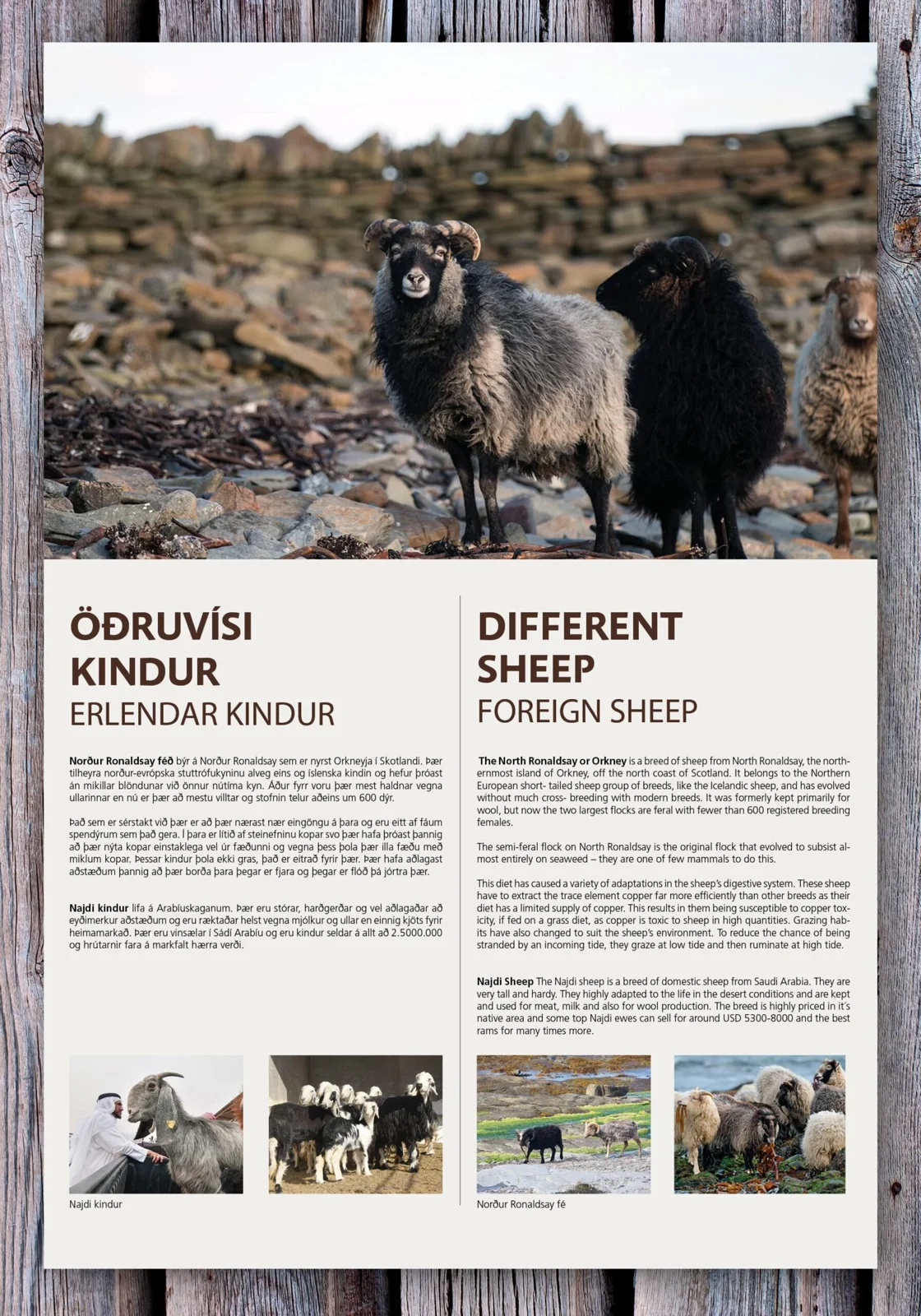
03 / North Ronaldsay and Najdi sheep
A comparison with sheep beyond Iceland: North Ronaldsay sheep from Orkney are described through their coastal life and seaweed diet, while Najdi sheep from Saudi Arabia illustrate adaptation to a very different environment. The photographs are educational comparisons; they do not mean these breeds live at Daladýrð.
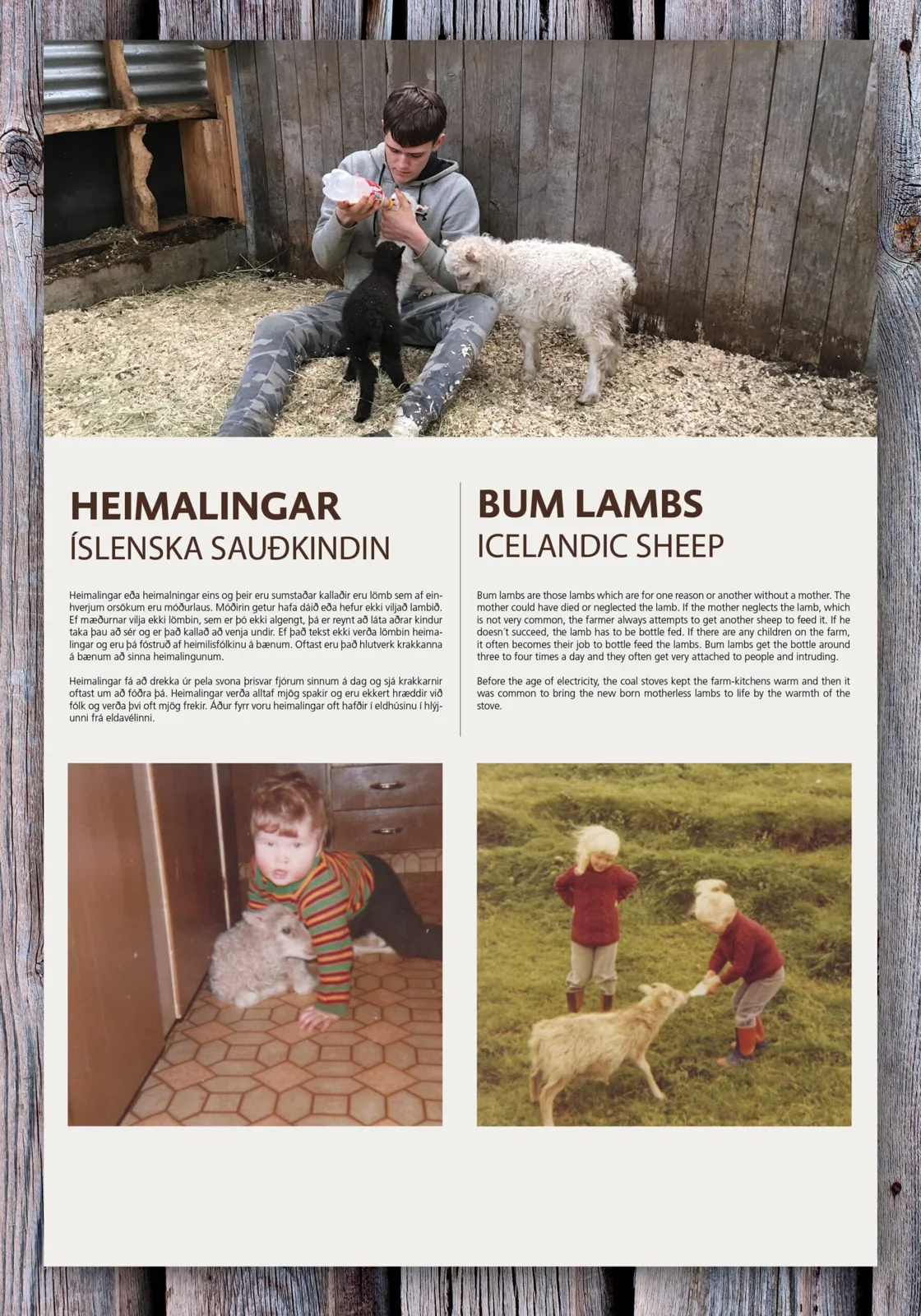
04 / Bottle-fed lambs
Heimalingar are lambs raised with additional care when their mother has died or cannot feed them. The panel describes attempts to foster a lamb with another ewe, bottle-feeding when needed and the close bonds that can develop with people. Its family photographs also recall keeping young lambs warm in farm kitchens. Feeding at the park is always guided by the team.
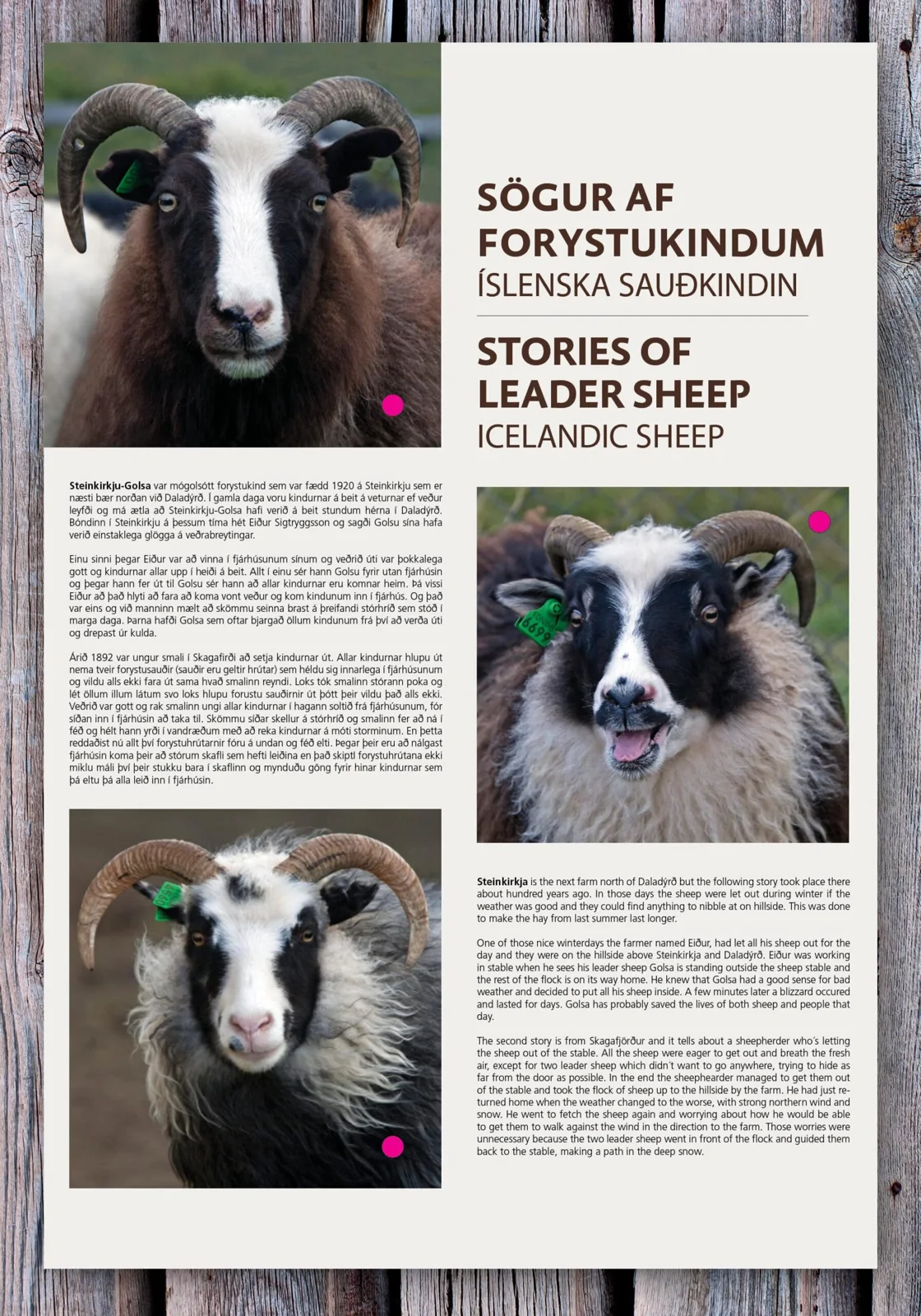
05 / Stories of leader sheep
The panel retells local farming stories about leader sheep. One concerns Golsa at neighbouring Steinkirkja, whose return with the flock was understood by the farmer as a warning before a blizzard. Another tells of leader sheep guiding a flock home through snow in Skagafjörður. These are accounts from farming tradition, preserved as stories.
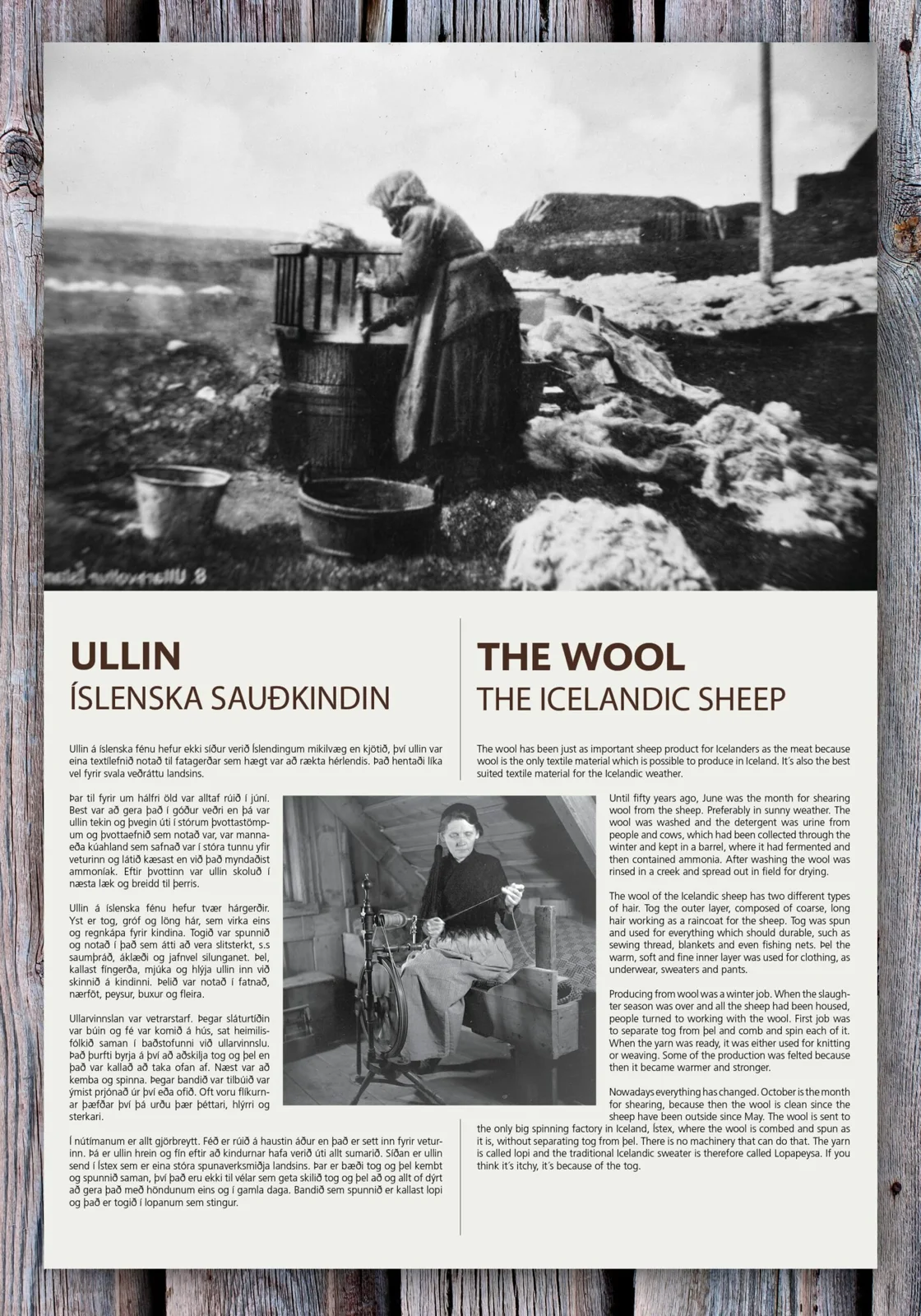
06 / The wool
Icelandic wool has a coarser outer layer, tog, and a softer inner layer, þel. The panel describes how these fibres were separated, washed, combed and spun, and how wool work occupied households in winter. It connects that history with lopi yarn and the knitted Icelandic sweater, the lopapeysa. Historical photographs show washing and spinning.
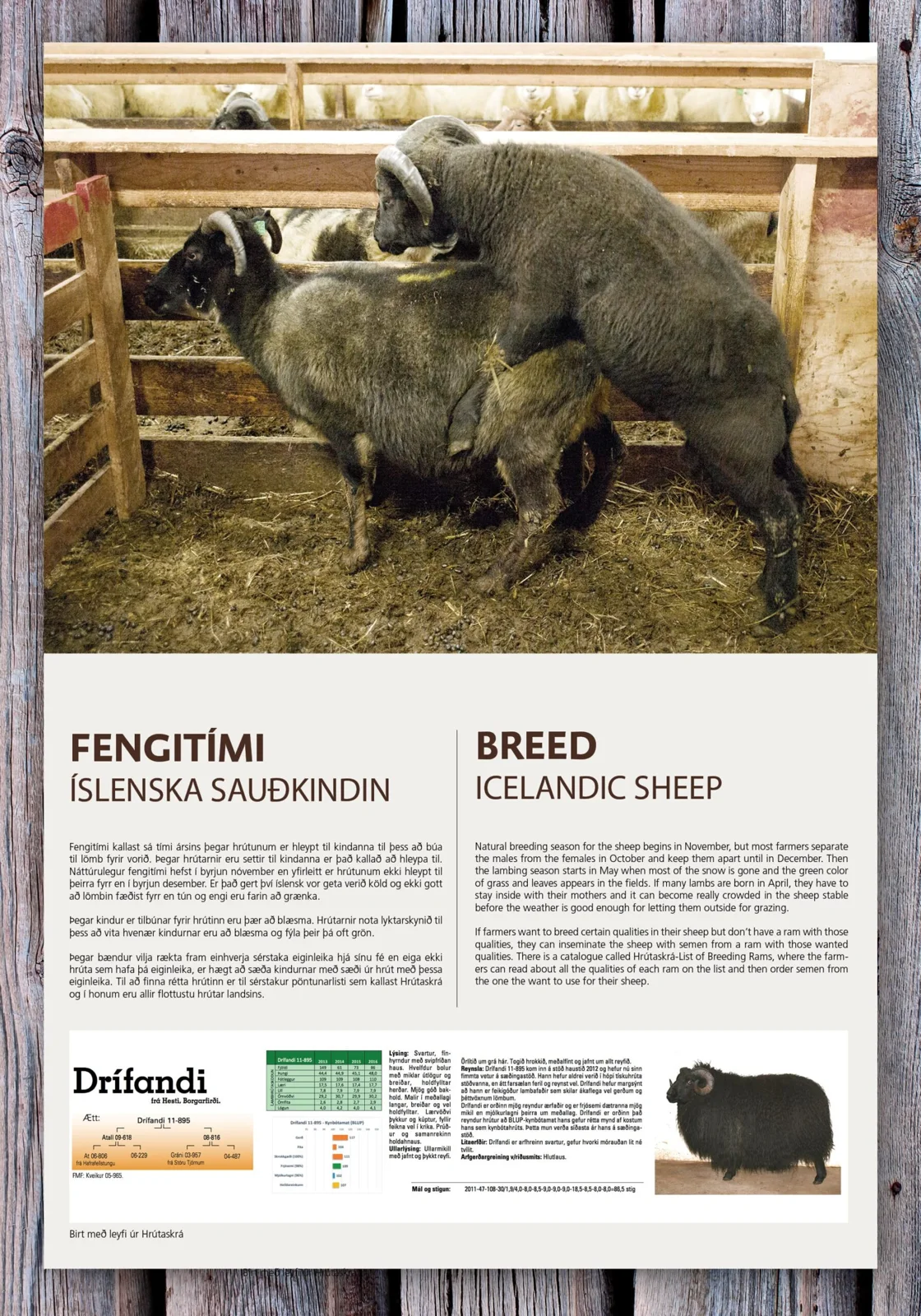
07 / Breeding time
Fengitími is the breeding season, planned around the arrival of lambs in spring. The panel introduces selecting a ram for particular characteristics and the use of breeding records and artificial insemination. Its catalogue example is a historical illustration, not a current breeding offer or visitor activity.
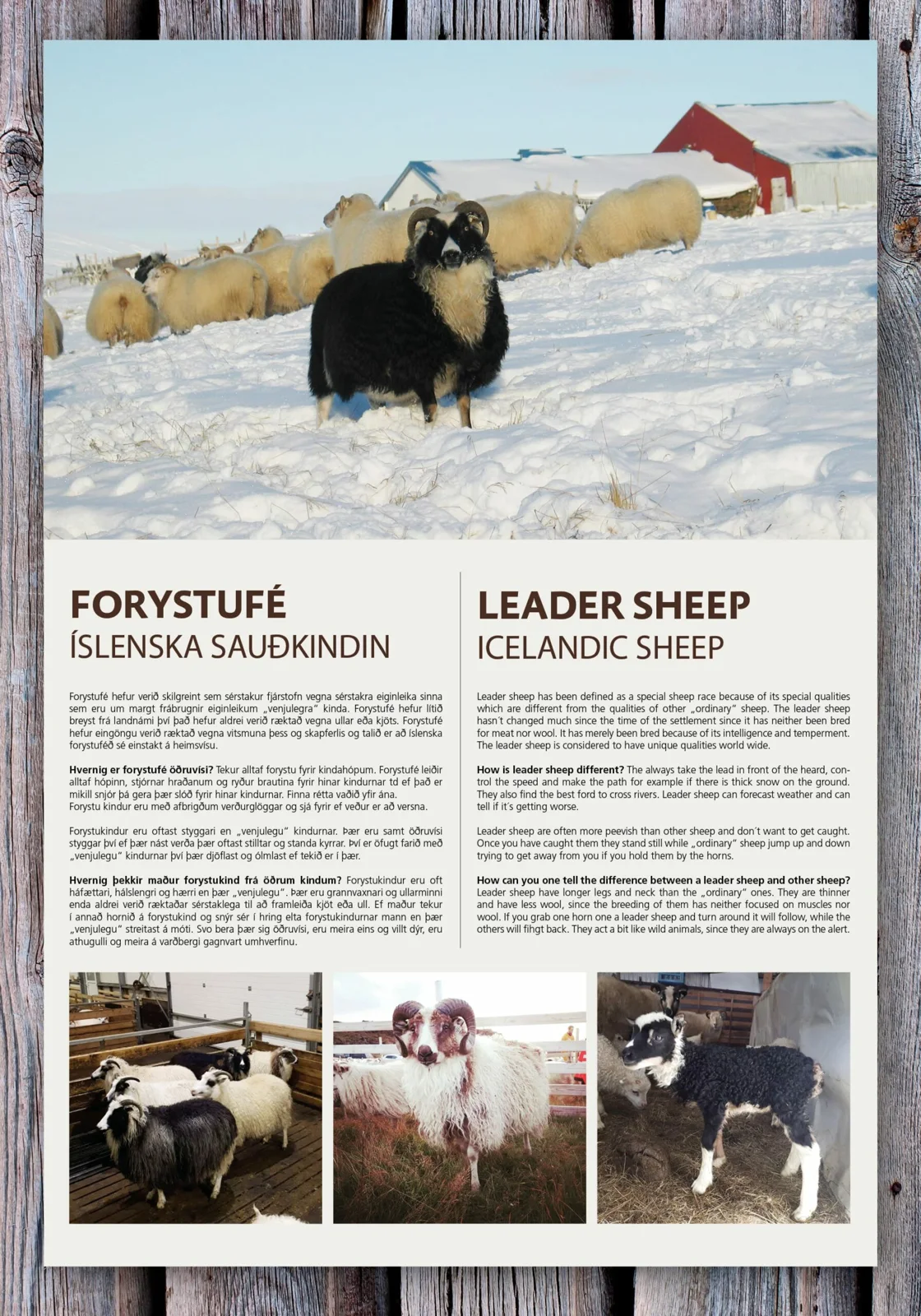
08 / Leader sheep
Forystufé are leader sheep, valued in Icelandic farming for their alertness, temperament and tendency to take the lead. The panel contrasts their behaviour and appearance with sheep bred principally for meat and wool. It describes their place in moving a flock through difficult terrain; visitors should leave handling and herding to the farm team.
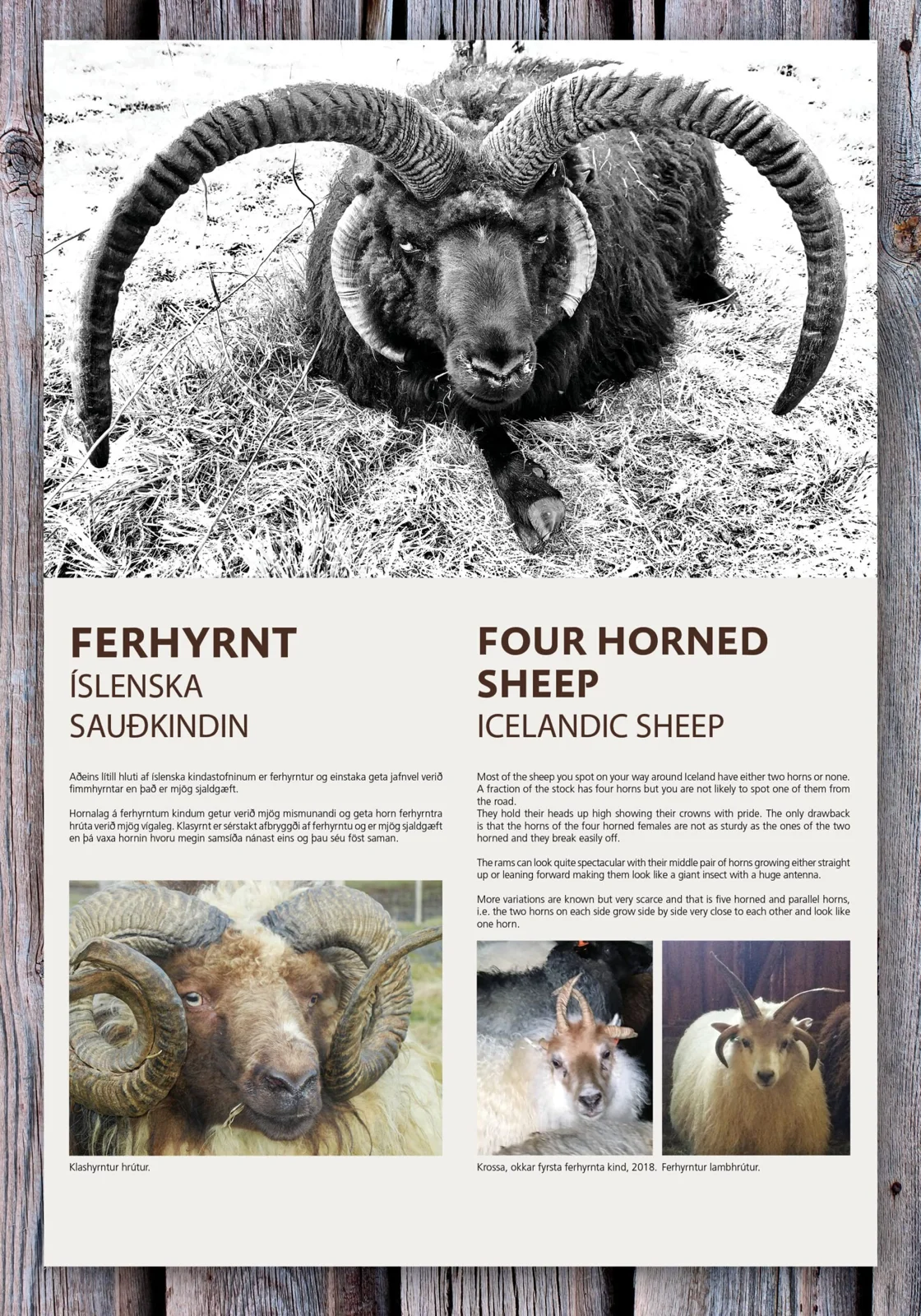
09 / Four-horned sheep
Some Icelandic sheep have four horns, with striking variations in their shape and direction. The panel compares these with the more familiar two-horned and hornless sheep. One photograph introduces Krossa, described in the original guide as Daladýrð’s first four-horned ewe in 2018. The photographs preserve that part of the farm album.
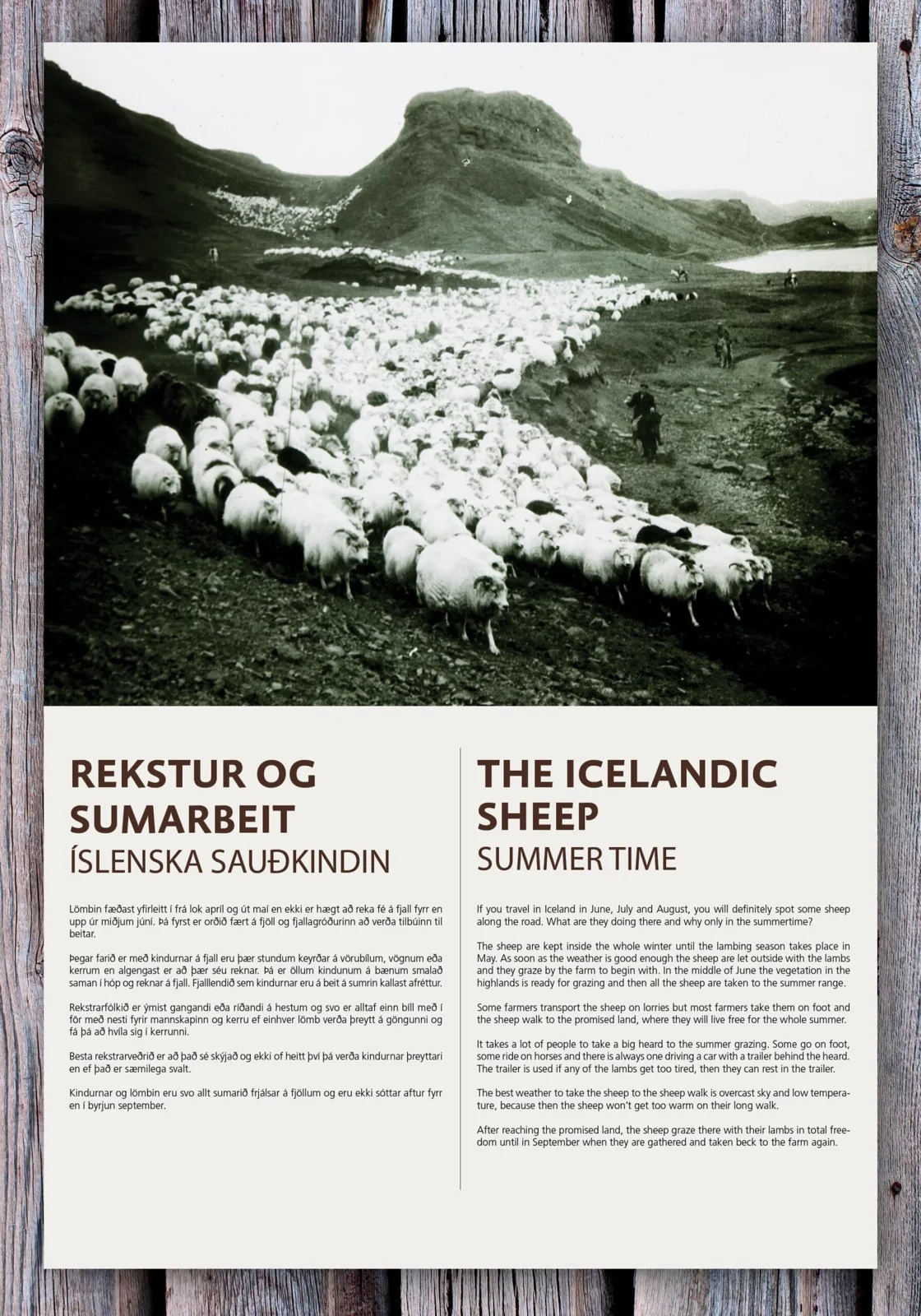
10 / Summer grazing
This panel follows sheep and lambs from the sheltered spring farm to summer grazing land. It describes waiting for suitable ground and vegetation, moving the flock on foot or with transport, and gathering the animals again in autumn. Timing depends on conditions; it is a farming-season overview rather than a timetable for visits.
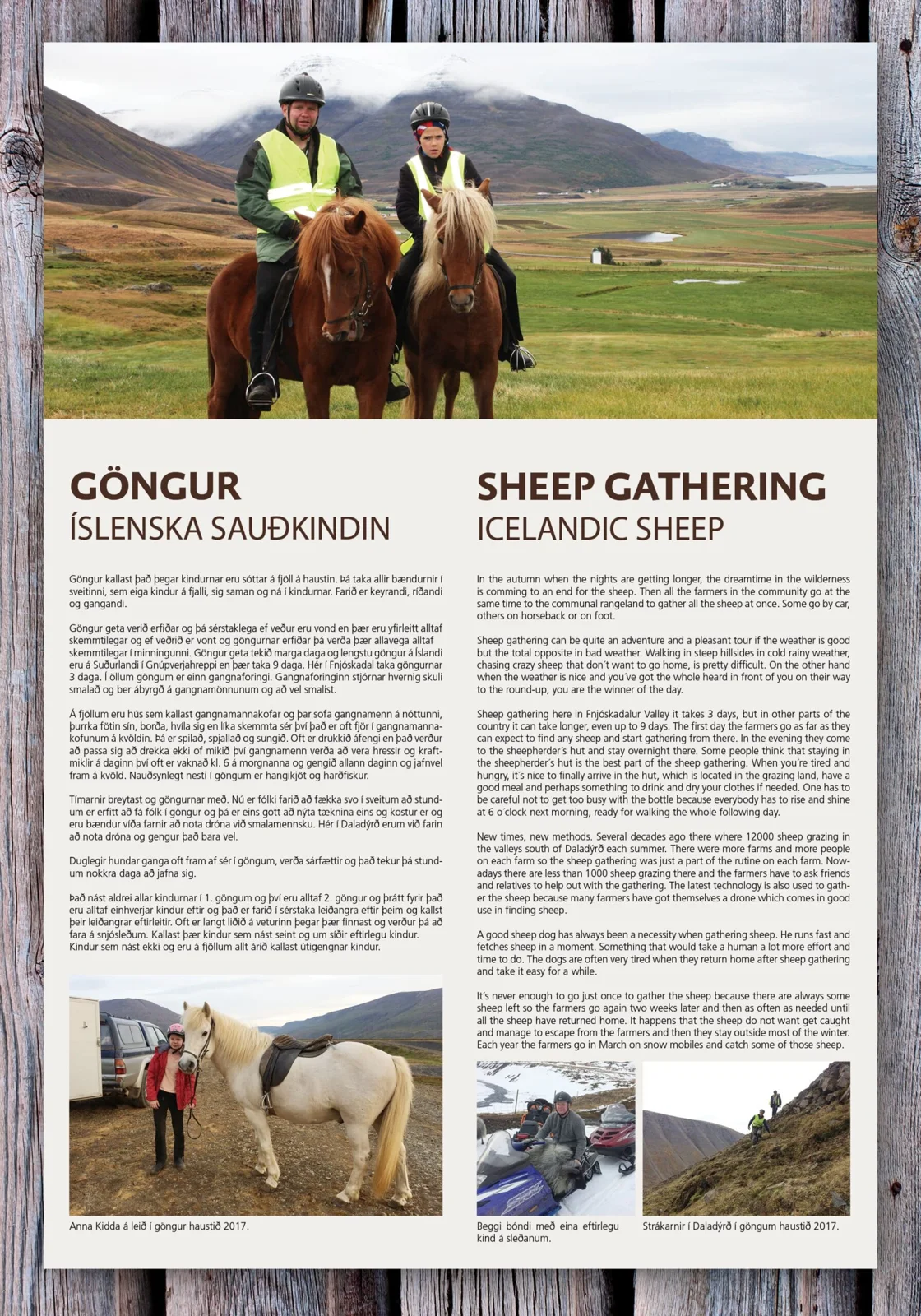
11 / Autumn sheep gathering
Göngur brings farmers and helpers together to find sheep on the grazing land and bring them home. The panel describes walking and riding through the valley, working with dogs, staying in shepherds’ huts and returning for animals missed on the first gathering. Family photographs include Anna Kidda riding and Beggi collecting a sheep in the snow.
12 / Herding dogs
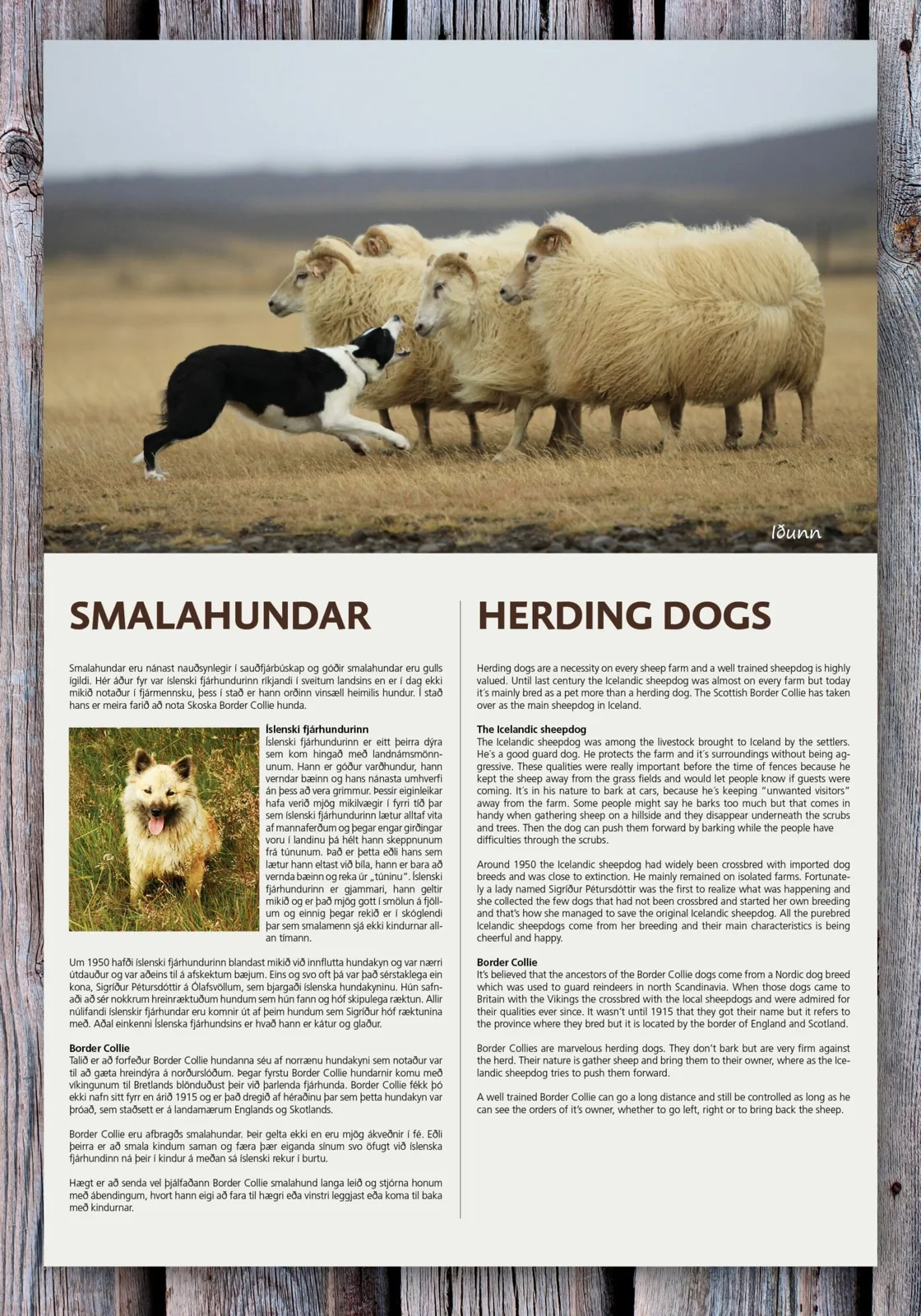
The guide introduces the Icelandic sheepdog and the Border Collie through their roles around farms and flocks. It discusses different herding styles, training and the bond between a dog and its handler. The dogs pictured help explain farming life; visitors should always ask before approaching an animal or interrupting its work.
13 / Merino and Beltex sheep
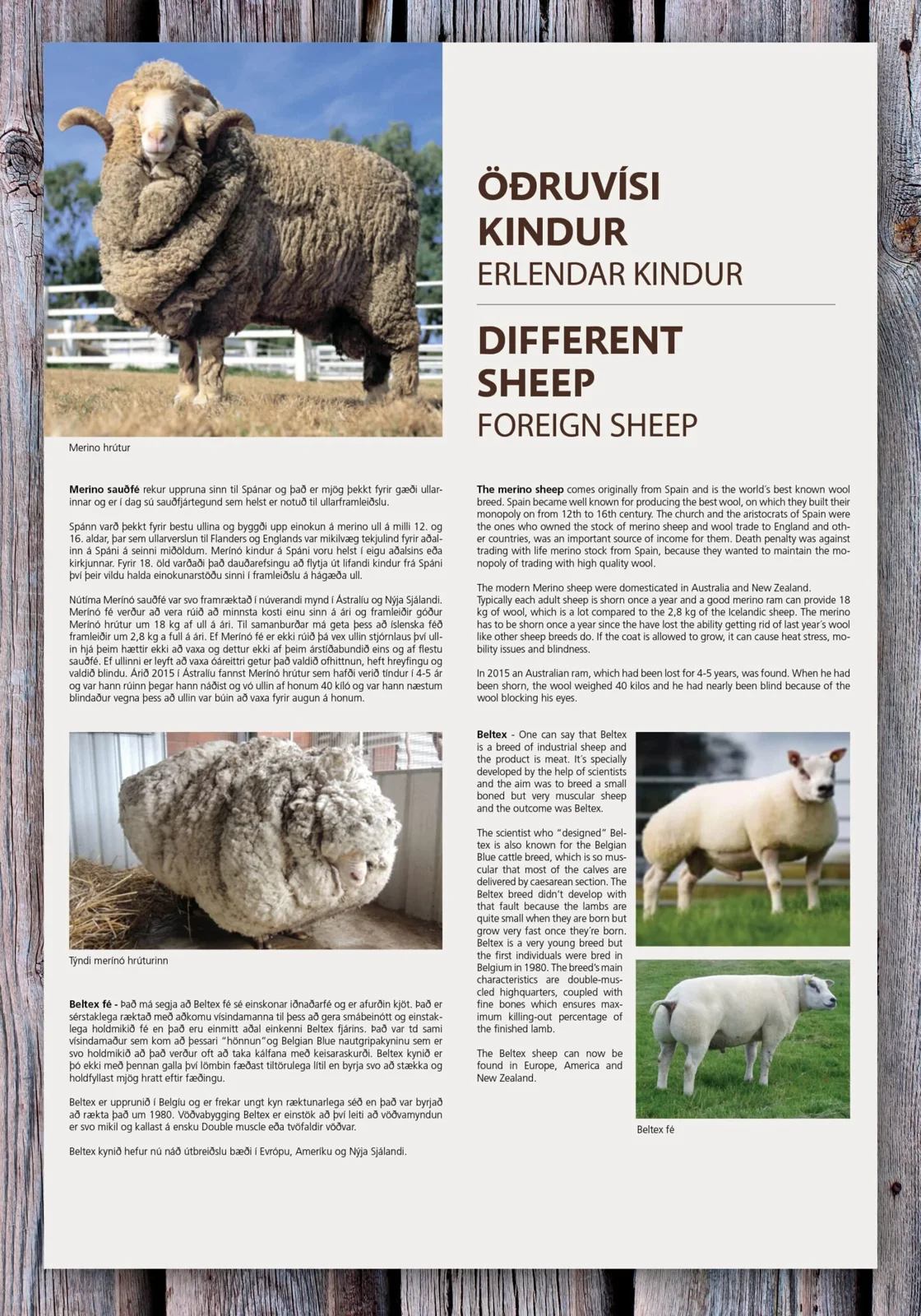
A second comparison introduces Merino sheep through their wool and the need for appropriate shearing and care, and Beltex through selection for meat production. Together with the North Ronaldsay and Najdi panel, it shows how people have bred sheep for different environments and purposes. These are educational examples from outside the Icelandic farm story.
14 / Sheep and the settlement of Iceland
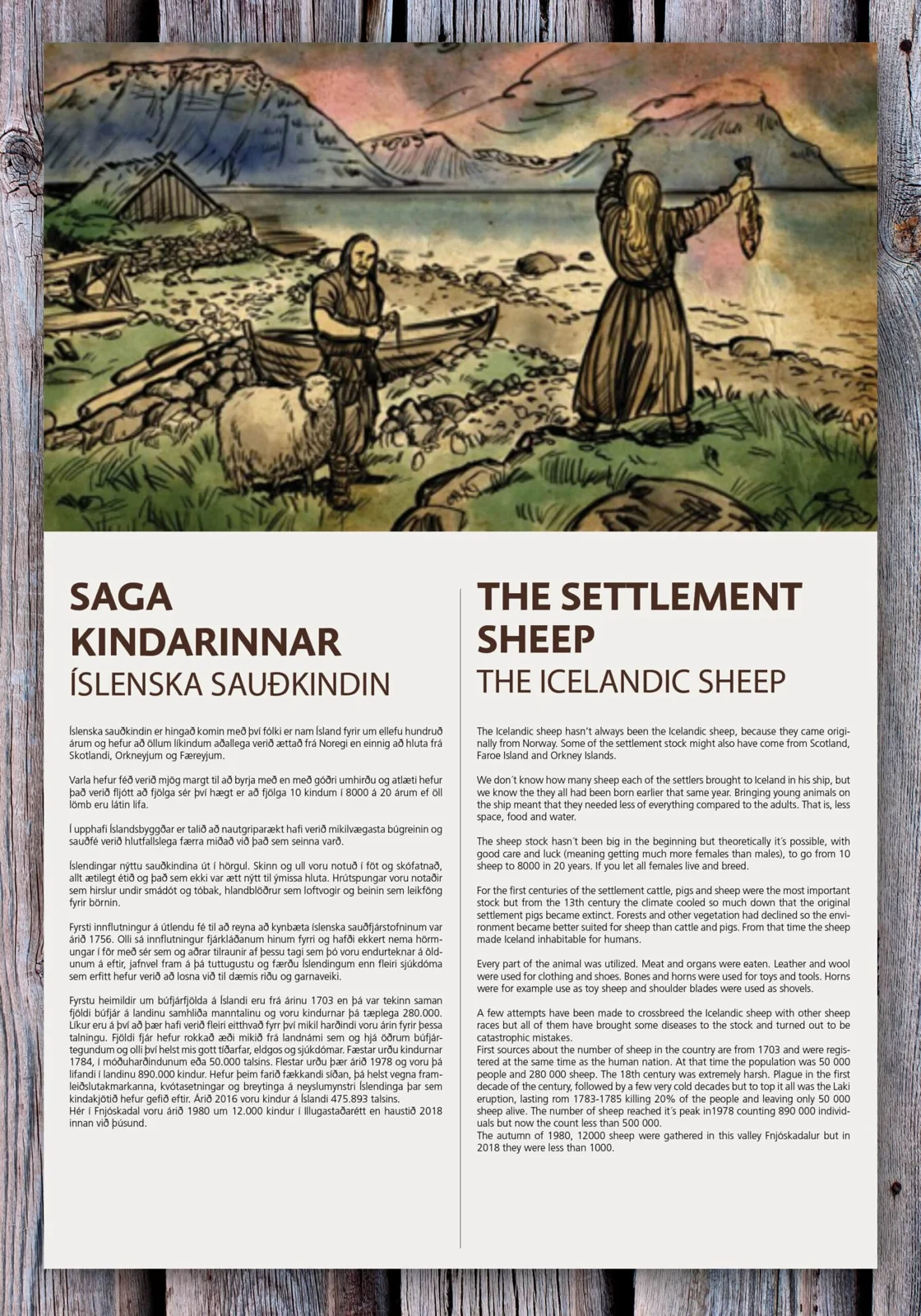
The history panel traces sheep back to Iceland’s settlement and explores their importance for food, clothing and household materials. It also discusses difficult periods in farming and changes in the number of farms and sheep. Its numerical examples belong to the dated original guide and should not be read as today’s statistics.
15 / A tribute to the Icelandic sheep
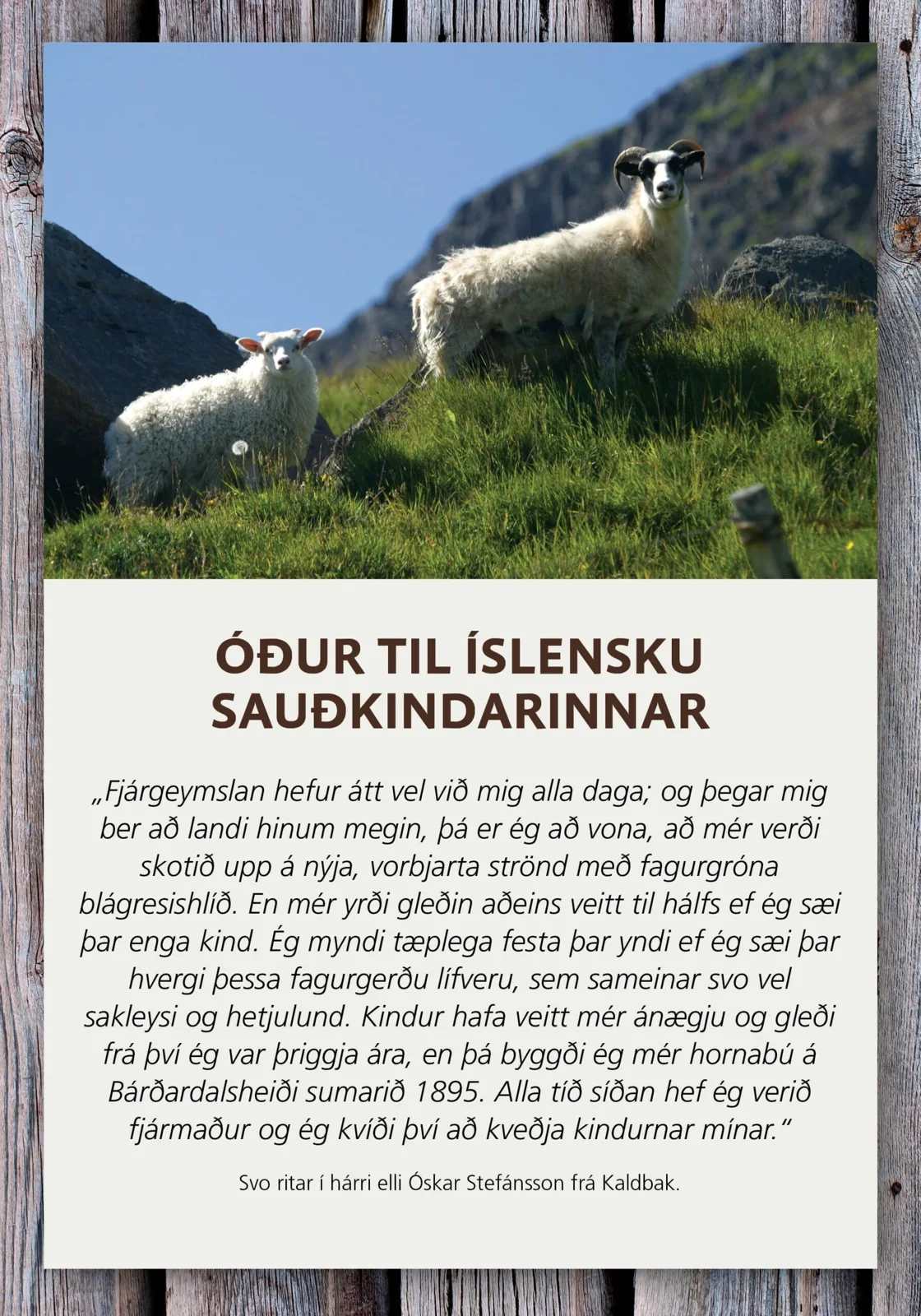
The final panel preserves an Icelandic reflection by Óskar Stefánsson from Kaldbakur on a lifetime spent with sheep. It expresses affection for the animals and the difficulty of imagining life without them. The original Icelandic text remains visible in the illustrated panel.
A LITTLE MORE DALADÝRÐ
A little life from the farm.
Follow @daladyrd for recent photographs, news and visitor updates.